Torque Sensor vs Cadence Sensor: Which E-Bike Feels Better to Ride?
A detailed comparison of e-bike torque sensors and cadence sensors, including ride feel, cost, control logic, climbing, commuting and product-design trade-offs.
Two e-bikes can have the same motor power and battery capacity yet feel completely different from the first pedal stroke. The reason is often the pedal-assist sensor.
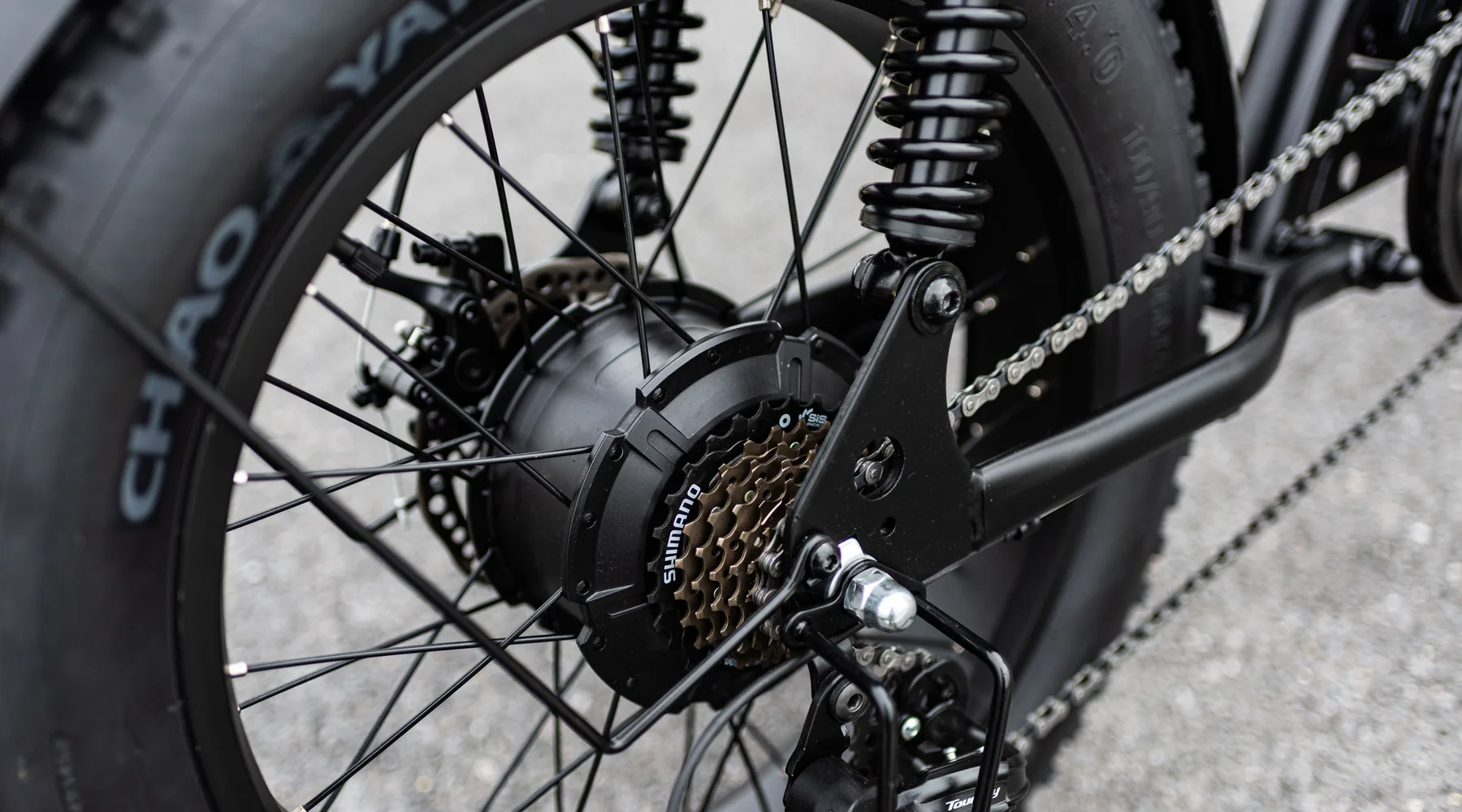
The two most common approaches are cadence sensing and torque sensing. A cadence sensor asks a simple question: Are the cranks turning? A torque sensor asks a more useful question: How hard is the rider pushing?
That difference changes acceleration, control, efficiency and the character of the entire bike.
How a cadence sensor works
A traditional cadence-based pedal-assist system detects crank rotation, often using a magnet ring and sensor. Once rotation passes a threshold, the controller delivers assistance according to the selected PAS level.
On a basic system, PAS 1 might command a small fixed amount of motor output, PAS 5 a much larger amount. The motor does not necessarily care whether the rider is pressing lightly or standing on the pedals.
Advantages include:
- low cost;
- simple hardware;
- easy integration;
- consistent assistance with very little rider effort;
- suitability for riders who want the motor to do more of the work.
The weakness is response quality. Cheap systems can have a noticeable delay before assistance starts and another delay before it stops. That can produce the familiar “surge” associated with low-cost e-bikes.
How a torque sensor works
A torque sensor measures force somewhere in the drivetrain: at the bottom bracket, crank, axle or another strain-sensitive component. The controller then scales motor assistance in proportion to rider effort.
Push gently and the motor adds a little. Push hard and it adds more.
This produces the impression that the rider has stronger legs rather than that an external motor has switched on.
Electric Bike Report notes that torque sensors have spread beyond premium mid-drives and are increasingly found on hub-drive bikes, including products below the $2,000 level.1
The difference is easiest to feel at low speed
Consider pulling away from a traffic light.
With a basic cadence sensor, the rider begins rotating the cranks. After a short detection delay, the system may deliver a preset amount of assistance. If the selected PAS level is high, acceleration can feel abrupt.
With a torque sensor, assistance can begin as soon as meaningful pedal force is detected and increase with the rider’s effort. The launch tends to feel more proportional.
This matters in crowded cycle lanes, on shared paths and during low-speed maneuvering where fine control is more valuable than raw power.
Cadence sensors can actually be easier for low-effort riding
Torque sensing is often described as the premium solution, but there are users for whom cadence sensing is preferable.
A cadence system can provide substantial power while the rider contributes very little force, as long as the cranks keep turning. Riders who want minimal physical effort may appreciate this.
With a torque sensor, the bike generally expects meaningful rider input. The exact calibration varies, but the principle is that assistance is linked to effort.
This creates an important product-design question: is the bicycle intended to feel like an amplified bicycle or like a low-effort mobility device?
Sensor type affects range
Because torque sensors respond to rider contribution, they can encourage a more efficient sharing of work. A rider pressing harder supplies more human power and may use less battery for the same speed.
But this is not automatic. A torque-sensing bike in its maximum support mode can still consume a great deal of energy.
Likewise, a cadence-based bike ridden conservatively in low PAS can be efficient. Sensor type shapes behavior, but battery consumption still depends on controller tuning, motor efficiency, terrain, speed and rider choices.2
Why torque sensors pair so well with mid-drives
Mid-drive systems already measure and manage power through the crank area. Integrating high-quality torque sensing there allows sophisticated control strategies based on torque, cadence, speed and sometimes inertial data.
Modern eMTB systems use these inputs to manage traction and response on technical terrain. The best implementations feel immediate without becoming jerky.
E-MOUNTAINBIKE’s motor comparisons repeatedly show that software behavior and power delivery matter alongside headline torque and wattage figures.3
Why hub-drive torque sensing is important
For years, “hub motor” often implied a lower-cost cadence system. That is changing.
A rear-hub motor combined with a good torque sensor can preserve the hub architecture’s cost and maintenance advantages while delivering much more natural pedal response. This is particularly attractive for urban commuters and trekking bikes.
For manufacturers, it creates a useful middle tier between entry-level cadence hubs and expensive European-style mid-drives.
Five areas where calibration matters
Simply saying “torque sensor” does not guarantee a premium ride. Software calibration matters in at least five areas:
1. Start sensitivity
Too little sensitivity makes the bike feel slow to react. Too much can create unexpected power when the rider rests a foot on the pedal.
2. Assistance curve
The controller must decide how much motor power corresponds to rider torque. A commuter may benefit from smooth progressive support; an eMTB may need a more aggressive response in technical climbing modes.
3. Ramp-up time
Even proportional assistance can feel abrupt if motor torque rises too quickly.
4. Cut-off behavior
Assistance should stop predictably when pedaling ceases. This is important for both control and regulatory compliance in many markets.
5. Cadence interaction
A sophisticated system should not treat the same pedal torque identically at every cadence. Motor efficiency and rider biomechanics change with crank speed.
Which sensor is better for commuting?
For most riders who want a bicycle-like experience, torque sensing is preferable. It improves low-speed control, makes starts more intuitive and allows the bike to respond to actual effort.
Cadence sensing still makes sense when price is critical or when users want substantial assistance with minimal force.
A well-tuned cadence system can be perfectly usable; a poorly tuned torque system can still disappoint. The implementation matters as much as the sensor label.
Which is better for cargo bikes?
Torque sensing is especially valuable when carrying children or heavy cargo because smooth launch control matters. Abrupt assistance can make a heavily loaded longtail harder to balance.
However, some utility riders value throttle availability where legal, particularly for starting a heavy bike. In those markets, the control strategy may combine torque sensing, pedal assist and throttle input.
Which is better for mountain bikes?
Torque sensing is effectively the standard for serious eMTBs. Technical climbing requires precise modulation, and the system must respond naturally as rider effort changes over rocks, roots and steep gradients.
The question at the high end is no longer whether a torque sensor exists; it is how well the complete software stack interprets torque, cadence and wheel behavior.
What B2B buyers should ask suppliers
Instead of simply checking a box labeled “torque sensor,” ask:
- where the sensor is located;
- measurement resolution and sampling rate;
- how the signal is filtered;
- start and stop thresholds;
- how PAS levels scale assistance;
- whether firmware can be tuned for an OEM project;
- whether calibration is required after service;
- what happens if the sensor fails;
- how the system behaves at very low cadence.
These details determine whether the finished bike feels refined.
Bottom line
Cadence sensors are inexpensive and can deliver effortless assistance. Torque sensors make an e-bike respond more like a bicycle by linking motor output to rider effort.
For the modern mainstream market, torque sensing is increasingly becoming a quality marker — especially as the technology moves into affordable hub-drive bikes. But the real differentiator is not the sensor alone. It is the quality of the controller software built around it.
Sources
Image: F x / Pexels, used under the Pexels license.
Footnotes
-
Electric Bike Report, “E-Bike Torque Sensor vs Cadence Sensor.” https://electricbikereport.com/e-bike-torque-sensor-vs-cadence-sensor/ ↩
-
BikeRadar, “How to increase your electric bike’s range.” https://www.bikeradar.com/advice/buyers-guides/electric-bike-battery-range ↩
-
E-MOUNTAINBIKE, “The best e-bike motor of 2026.” https://ebike-mtb.com/en/emtb-motor-comparison/ ↩