 China eBike
EU Battery Regulation and E-Bikes: When Battery Passports Apply and What Importers Must Track
How EU battery-passport rules apply to e-bike batteries, the February 2027 deadline, and the records importers should verify.
For an e-bike importer, the immediate question is not whether the complete bicycle needs a battery passport. It is whether the finished traction battery placed on the EU market falls within the Regulation’s light means of transport (LMT) battery category.
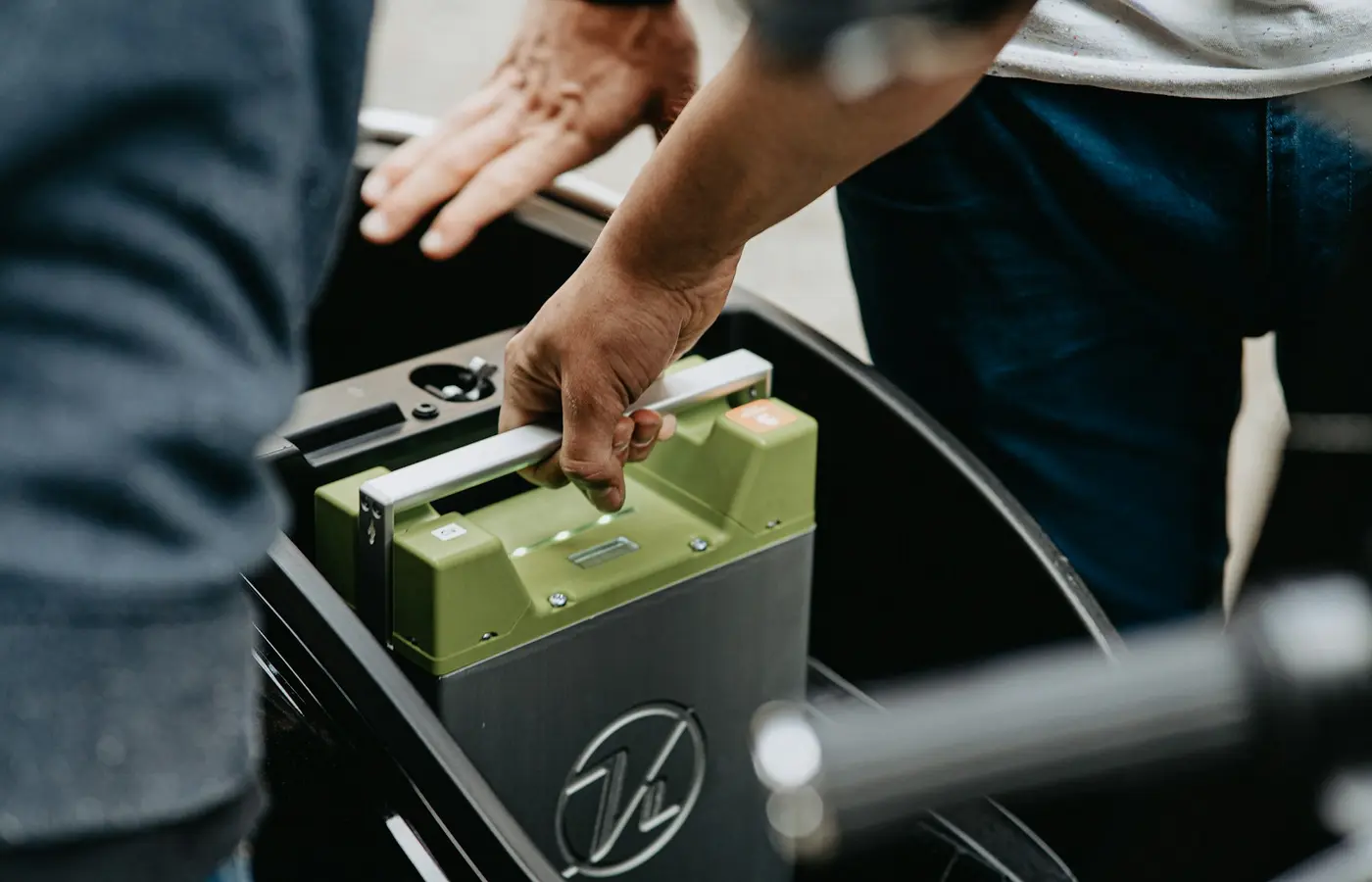
That classification matters because LMT batteries are within the EU battery-passport requirement from 18 February 2027. A typical removable or frame-integrated e-bike battery may well meet the definition, but importers should not assume that every battery supplied with an e-bike is automatically an LMT battery. The statutory category depends on the finished battery’s design, mass, sealing and intended traction application.
The governing law is Regulation (EU) 2023/1542, commonly called the EU Batteries Regulation.1 Commission guidance and FAQs help explain how the future digital passport is expected to operate, but they do not replace the binding Regulation where classification or compliance obligations are in doubt.
The importer decision: is the traction battery in passport scope?
The battery passport is a battery-level obligation. It does not mean that an e-bike as a whole becomes a passported product under the Batteries Regulation. The relevant product is the finished battery placed on the EU market, whether it is supplied separately, fitted to a bicycle, or supplied as part of an e-bike system.
From 18 February 2027, the passport requirement applies to:
- electric-vehicle (EV) batteries;
- LMT batteries; and
- industrial batteries with a capacity greater than 2 kWh.2
For conventional e-bike supply chains, the practical task is usually to establish whether the traction pack is an LMT battery. A battery that is not an LMT battery may still be regulated under another battery category and may still carry extensive product, conformity, labelling, producer-responsibility and end-of-life obligations. It simply should not be treated as passport-covered without first confirming the applicable category.
Importers should document this decision for each battery model and meaningful version. A change in pack enclosure, battery mass, intended vehicle use, BMS configuration or product positioning can affect the evidence supporting the classification decision.
Why most e-bike traction batteries are likely to be LMT batteries
Article 3 of Regulation (EU) 2023/1542 defines an LMT battery as a battery that is:
- sealed;
- 25 kg or less; and
- specifically designed to provide electric power for traction of wheeled vehicles that can be powered by an electric motor alone or by a combination of motor and human power;
- while not being an EV battery.1
This description will commonly fit a modern e-bike traction battery. Many e-bike packs are sealed units, are substantially below the 25 kg limit, and are specifically designed to power a pedal-assist bicycle or another small wheeled vehicle.
However, “commonly” is not the same as “always.” An importer should confirm the facts rather than classify by sales channel or marketing language alone. Relevant evidence may include:
- the battery manufacturer’s technical specification;
- battery mass, including the finished enclosure and necessary safety components;
- drawings or product photographs showing the finished, sealed configuration;
- intended-use statements in technical documentation;
- the compatible vehicle types and electrical interfaces;
- model, serial-number and version-control records; and
- any classification rationale supplied by the manufacturer.
The distinction from an EV battery is important. The Regulation defines categories separately, and a battery intended for a vehicle within the EV-battery definition should not simply be relabelled an LMT battery because it is physically similar to an e-bike pack. Likewise, a battery used in a light vehicle may not automatically be an LMT battery if it does not meet the full definition.
A practical rule is to assess the finished traction battery as supplied to the market, not just the cells inside it. This aligns with the Commission’s explanation that the passport applies to the finished, safely working battery rather than to each cell or module within it.3
Battery passport timing: what starts on 18 February 2027
The date to plan around is 18 February 2027. From that date, each LMT battery within scope must have a battery passport when it is placed on the EU market.2
One recurring misunderstanding concerns the 2 kWh threshold. The threshold is relevant to the passport obligation for industrial batteries: industrial batteries above 2 kWh are included in the passport scope. It is not a general exemption for LMT batteries.
That means a typical e-bike battery’s relatively modest energy capacity does not, by itself, remove it from the passport requirement if it is correctly classified as an LMT battery. An importer should not reason that a 500 Wh, 625 Wh or 750 Wh pack is exempt merely because it is below 2 kWh.
| Battery category | Passport position from 18 February 2027 | Key point for e-bike importers |
|---|---|---|
| LMT battery | Included | Typical e-bike traction packs may fall here if they meet the statutory definition. |
| EV battery | Included | Separate category; do not assume all traction batteries are LMT batteries. |
| Industrial battery above 2 kWh | Included | The 2 kWh threshold is associated with this category. |
| Other battery categories | Depends on the Regulation and applicable obligations | They may remain subject to other Batteries Regulation duties even where the passport rule does not apply. |
The Commission’s data-point guidance also distinguishes between information that is required from February 2027, information required only in certain circumstances, and information not yet required or displayed at that date.4 This is important for procurement planning: suppliers should prepare the underlying data early, but importers should not present every possible future data field as an immediate mandatory requirement.
What the passport covers: finished battery, QR code and accessible data
The Commission’s battery passport FAQ addresses a basic supply-chain issue: is a passport needed for a cell, module, pack or complete system? Its answer is that the passport applies to the finished battery. A finished traction battery can contain multiple cells, modules or packs, along with the battery-management system and other components necessary for safe operation.3
For an e-bike, this will normally point to the completed traction pack supplied to the bicycle brand, distributor or importer. It does not normally imply a separate consumer-facing passport for every individual cylindrical or pouch cell inside that pack.
The passport is intended to be linked to the battery through a QR code. The Commission describes a decentralised information model in which detailed battery data is maintained by the responsible economic operator rather than necessarily held in one central database.5
A QR code is therefore an access mechanism, not compliance in itself. A label can be present and still fail to support compliance if it points to incomplete, unavailable, incorrect or improperly controlled passport information.
The Commission’s material indicates that the passport may include information in areas such as:
- battery identification and technical characteristics;
- manufacturer and other economic-operator information;
- performance and durability;
- repair, reuse and recycling support; and
- sustainability and circularity information.5
Not all information will necessarily be available to every user. The Commission’s framework contemplates different access conditions for different information categories. Importers should therefore establish not only what data exists, but also who can access it: consumers, repairers, recyclers, market-surveillance authorities, customs-facing teams, commercial partners or the responsible economic operator.
Importer records to verify before placing e-bike batteries on the EU market
Battery passports sit alongside, rather than replace, the wider importer duties in the Batteries Regulation. Importers may place on the market only batteries that comply with the applicable requirements. Before placing a battery on the market, they must verify relevant conformity documentation and other specified compliance elements.1
For an e-bike importer, the following checklist is a useful operational baseline.
1. Establish the battery identity and classification
Maintain a record that links the battery to a precise model and version. It should capture the battery maker, model name, SKU, voltage, rated capacity, mass, serial-number logic, intended use and the classification rationale.
Do not rely on a generic declaration covering an undefined family of packs if the actual imported model has materially different characteristics.
2. Obtain the EU declaration of conformity and technical-documentation access
The importer should verify that the manufacturer has drawn up the EU declaration of conformity and technical documentation required under the Regulation before the battery is placed on the market.1
The importer does not necessarily need unrestricted possession of every confidential engineering file. But it needs a reliable arrangement to obtain or support access to the applicable documentation when authorities request it. The arrangement should identify the legal manufacturer, the EU contact route, document-retention responsibilities and the process for version-controlled updates.
3. Check marking, traceability and economic-operator details
Verify the applicable marking and traceability information on the battery or its packaging, as appropriate. This includes identifying the battery and the responsible economic operators in the manner required by the Regulation.
Importers should also ensure their own name, registered trade name or trademark, and postal address are provided where the importer obligations require this. A distributor’s warehouse label is not a substitute for correct importer identification.
4. Review instructions and safety information
The imported product should be accompanied by the relevant instructions and safety information in the language requirements of the Member State where it is made available. For e-bike batteries, this should be handled as a controlled document set, not an afterthought added by a reseller.
The exact content will depend on the product and applicable requirements, but importers should verify that warnings, charging information, handling restrictions and disposal information are consistent with the actual battery and charger system supplied.
5. Confirm the passport and QR-code plan where the obligation applies
For a passport-covered LMT battery, request a model-specific plan for the passport, QR-code placement, data hosting or access arrangement, data maintenance and change management.
Questions worth asking include:
- Which legal entity is responsible for maintaining the passport information?
- Is the QR code assigned to the battery model, batch, serialised unit or another level permitted by the applicable framework?
- What happens if the battery firmware, cell supplier, pack assembly site or technical specification changes?
- How will passport information remain available after a model is discontinued?
- Who responds if an authority identifies a missing or inaccurate data point?
Supply-chain data to request now for 2027 readiness
The Commission’s guidance document identifies 71 data points across battery categories and marks whether a data point is required, conditional, not required in February 2027, or applicable only to particular battery types.4 Importers should use it as a structured preparation tool, not as a reason to demand every possible field from every supplier immediately.
A proportionate supplier request can be organised into five groups.
Battery identity and technical characteristics
Request a stable battery identifier, model and version information, manufacturing details, chemistry information where applicable, rated technical characteristics, mass, compatibility information and serialisation or traceability logic.
The goal is to prevent an importer from linking the passport to a commercial SKU while losing the connection to the actual physical battery configuration.
Responsible economic operators
Request the legal identity and contact details of the manufacturer and other relevant economic operators, plus a clear statement of who maintains the passport data. Where the battery manufacturer, e-bike brand and EU importer are different entities, assign responsibilities in writing.
Performance and durability information
Ask what performance, durability and state-of-health-related data is applicable to the battery category and what evidence supports it. Do not assume that every field will be publicly visible or required from day one, but avoid discovering in late 2026 that the supplier has never collected data needed for the relevant battery model.
Repair, reuse and circularity information
Clarify what information will be made available to support removal, replacement, repair, repurposing, dismantling and recycling where applicable. E-bike brands should consider whether their frame design, battery lock system and proprietary connectors create practical barriers even where battery information is available.
Sustainability-related information
Request the supplier’s plan for sustainability and circularity data that may apply to the battery category. Requirements can be conditional and may evolve through the Regulation’s implementation framework. The prudent approach is to identify data owners and collection methods now, while checking the final applicable obligations before market placement.
A practical compliance workflow for e-bike importers
A workable programme does not start with a QR-code vendor. It starts with product control and category evidence.
- Identify the finished battery. Map every battery SKU, variant, pack revision and compatible e-bike model.
- Document the category decision. Record why the battery is treated as an LMT battery, another category, or pending further assessment.
- Verify baseline conformity records. Review the EU declaration of conformity, technical-documentation arrangements, markings, traceability details, instructions and safety information.
- Map passport coverage. For each in-scope LMT battery, link the physical battery identity to the intended passport and QR-code arrangement.
- Assign data ownership. Separate responsibilities among the cell supplier, pack assembler, battery manufacturer, e-bike brand, EU importer and any digital-service provider.
- Control changes. Require notice of changes to cells, chemistry, BMS, assembly location, enclosure, software, rated specification or legal manufacturer identity.
- Recheck before the deadline. Confirm the final applicable requirements, including Commission guidance and relevant technical-framework developments, before 18 February 2027.
The practical takeaway is straightforward: most conventional e-bike traction batteries are likely candidates for LMT classification, but the classification must be evidenced for the finished battery. If an e-bike battery is an LMT battery, its comparatively small capacity does not create a general 2 kWh passport exemption. Importers should prepare now by controlling battery versions, verifying conformity records and building a credible passport-data and QR-code process well before the February 2027 start date.
Frequently asked questions
Do e-bike batteries need an EU battery passport from February 2027?
An e-bike traction battery needs a passport from 18 February 2027 if it falls within the Regulation’s LMT battery definition. Many e-bike packs are likely to do so, but the conclusion depends on the finished battery’s characteristics and intended use rather than on the fact that it is sold with an e-bike.1
Does the 2 kWh threshold exempt typical e-bike batteries from the battery passport?
No general exemption follows from being below 2 kWh. The Commission describes the greater-than-2-kWh threshold in relation to industrial batteries. LMT batteries are separately included in the passport requirement from 18 February 2027.2
Is the EU battery passport required for the e-bike, the battery pack or each individual cell?
The passport applies to the finished battery. For a traction battery, that will normally be the working battery pack, including the BMS and components necessary for safe operation, rather than each individual cell inside the pack.3
What documents must an importer verify before placing an e-bike battery on the EU market?
At minimum, importers should verify the applicable EU declaration of conformity, technical-documentation arrangements, conformity and marking requirements, traceability information, manufacturer and importer identification, and relevant instructions and safety information. For passport-covered batteries, they should also verify the planned passport information and QR-code arrangement.1
Footnotes
-
Regulation (EU) 2023/1542 on batteries and waste batteries, EUR-Lex ↩ ↩2 ↩3 ↩4 ↩5 ↩6
-
European Commission: Guidance to support preparations for the Digital Batteries Passport ↩ ↩2 ↩3
-
European Commission: EU Digital Product Passport FAQ for Batteries ↩ ↩2 ↩3
-
European Commission: Guidance Document — Digital Batteries Passport data points by category ↩ ↩2
-
European Commission: Batteries Digital Product Passport information ↩ ↩2