Commuter E-Bike Buying Guide: Motor, Battery, Brakes, Comfort and Security
A practical commuter e-bike buying guide focused on daily reliability, realistic battery range, motor choice, brakes, comfort, racks, lights and service support.
A commuter e-bike should be judged differently from a recreational bicycle. The best daily bike is not necessarily the lightest, fastest-looking or most powerful. It is the bike that starts every morning, carries what you need, survives rain and potholes, stops safely and can be repaired without turning a small problem into a month-long parts search.
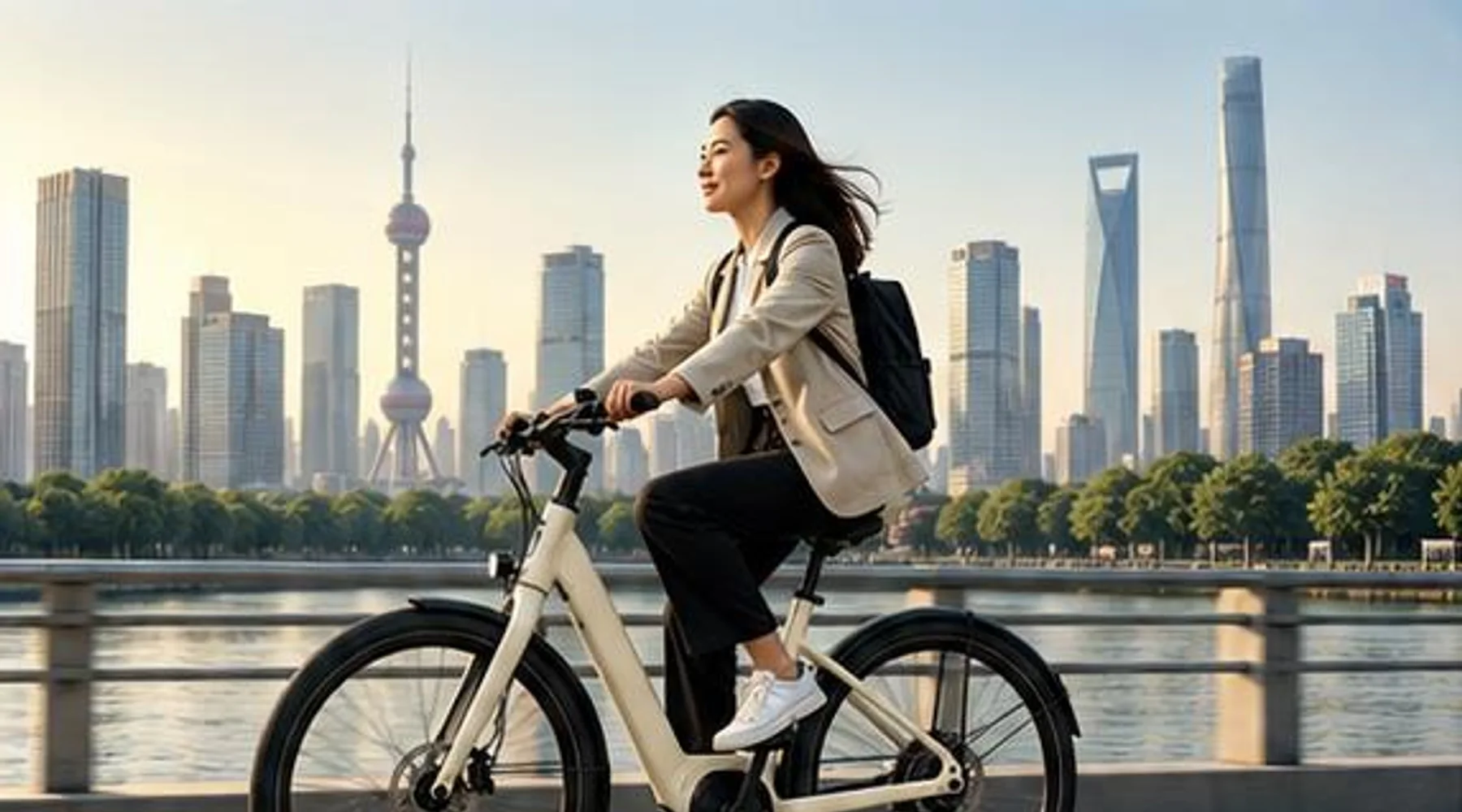
For commuting, reliability and fit usually matter more than peak motor numbers.
Start with the route
Before comparing bikes, write down five facts:
- round-trip distance;
- steepest and longest climb;
- road or bike-path surface;
- whether the bike must be carried upstairs;
- typical cargo — laptop, groceries, child seat or nothing.
Those facts determine almost every useful specification.
A 15km flat commute can work beautifully with a modest 400Wh battery and compact hub motor. A 50km hilly route with heavy panniers may justify 625Wh or more and a strong mid-drive.
Hub motor or mid-drive?
Rear-hub motors dominate many value-oriented commuters because they are simple and cost-effective. A modern hub bike with a torque sensor can feel refined while keeping drivetrain wear relatively low.1
Mid-drives are attractive for steep routes because they use the bicycle’s gears. They also centralize weight and often integrate well with premium city frames.
For flat urban commuting, do not pay for a mid-drive purely because it is seen as “higher end.” Spend the money where the route creates value.
Prioritize torque sensing for natural control
A torque sensor measures rider effort and adjusts assistance proportionally. A cadence sensor mainly detects whether the pedals are rotating.
For dense city riding, torque sensing usually improves low-speed control and makes starts feel more predictable.2
This is particularly useful in traffic, on shared paths and when maneuvering around pedestrians.
Battery: calculate your real daily need
BikeRadar notes that 400–500Wh is often adequate for paved commuting, while larger packs become useful for demanding terrain or longer routes.3
Instead of trusting an “up to 100km” claim, estimate energy use. A typical commute might consume roughly 8–14Wh/km depending on conditions.
For a 30km daily route at 12Wh/km:
30 × 12 = 360Wh.
A 500Wh battery leaves reasonable reserve. A 400Wh pack could work but offers less margin for cold weather, headwinds and aging.
If the battery is removable, charging at work can reduce the capacity you need to carry every day.
Weight matters only in context
A 27kg commuter can feel completely manageable while riding and completely unreasonable when carried to a third-floor apartment.
If stairs are unavoidable, prioritize total mass aggressively. A lighter battery, rigid fork and compact motor may be worth more than suspension or oversized tires.
If the bike lives in a ground-floor garage, a few extra kilograms may be a good trade for racks, fenders, a large battery and wider tires.
Brakes deserve more attention than the display
City riding means frequent braking in variable weather. Hydraulic disc brakes generally offer strong, consistent stopping with less hand effort than basic mechanical systems.
Look at rotor size, replacement-part availability and whether the system can handle the bike’s total loaded mass.
A bright color screen is pleasant. Reliable brakes are more important.
Integrated lights should run from the main battery
A commuter bike should ideally have front and rear lights powered by the e-bike battery so the rider does not need to manage separate rechargeable accessories.
Useful features include:
- daytime running light;
- brake-light function;
- side visibility;
- automatic light mode;
- replaceable standardized lamps.
The goal is boring reliability: the lights should simply be available every ride.
Fenders and racks are not optional for many commuters
Full-length fenders protect clothing, drivetrain and luggage from road spray. A properly rated rear rack is useful even if the rider initially plans to use a backpack.
For office commuting, panniers are often more comfortable than carrying weight on the rider’s back.
Check the rack load rating rather than assuming all integrated racks can carry child seats or heavy cargo.
Tires define comfort and puncture risk
Commuter tires need a balance of rolling resistance, grip and puncture protection. Very wide fat-bike tires add comfort but also weight and drag. Very narrow tires can feel harsh on poor pavement.
A moderate-volume tire with reinforced puncture protection is often the better daily choice.
Maintain appropriate pressure; underinflation increases rolling resistance and battery consumption.4
Security should be designed into the purchase
E-bikes are high-value objects. Security is therefore part of total ownership cost.
A practical setup may include:
- high-quality primary lock;
- secondary wheel/frame lock;
- removable battery;
- GPS or connected tracking if available;
- motor/display lockout;
- secure indoor overnight storage.
Connected systems increasingly include anti-theft functions, but electronics should supplement rather than replace a physical lock.
Certification matters
In the U.S., electrical-system safety standards such as UL 2849 have become increasingly important. UL 2849 evaluates the e-bike electrical drive train, battery and charger system combination for electrical and fire safety.5
For buyers, clearly documented certification is more meaningful than vague claims such as “uses certified cells.”
In Europe, check that the bicycle configuration meets the applicable pedelec and product-safety requirements for the market.
Service support can outweigh specification advantages
Before purchasing, ask:
- Can a local shop service the brakes and drivetrain?
- Is the motor system supported in the country?
- Can the battery be replaced in three to five years?
- Are displays and controllers proprietary?
- Does the brand stock derailleur hangers, brake pads and chargers?
- Who handles warranty labor?
A slightly less exciting bike with strong service support is often a better commuter than a high-spec DTC model with no parts pipeline.
A sensible commuter specification in 2026
For many riders, a balanced everyday configuration looks like:
- torque-sensing rear hub or mid-drive;
- 400–625Wh battery depending distance;
- hydraulic disc brakes;
- puncture-resistant 45–60mm tires;
- integrated lights;
- full fenders;
- rear rack;
- removable battery if outdoor charging is difficult;
- total weight appropriate to storage conditions;
- documented electrical safety compliance.
There is no need to maximize every number.
Bottom line
A commuter e-bike is transportation equipment. Buy it like transportation equipment.
Route, reliability, braking, battery reserve, fit and service support should come before motor marketing. The best commuter is the one that removes friction from daily life — not the one with the most impressive specification sheet.
Sources
Image: Original AI-generated editorial asset for China eBike.
Footnotes
-
Electric Bike Report, “Electric Bike Hub Motors: The Complete Guide.” https://electricbikereport.com/electric-bike-hub-motors-the-complete-guide/ ↩
-
Electric Bike Report, “E-Bike Torque Sensor vs Cadence Sensor.” https://electricbikereport.com/e-bike-torque-sensor-vs-cadence-sensor/ ↩
-
BikeRadar, “E-bike batteries explained.” https://www.bikeradar.com/advice/buyers-guides/ebike-batteries-explained ↩
-
BikeRadar, “How to increase your electric bike’s range.” https://www.bikeradar.com/advice/buyers-guides/electric-bike-battery-range ↩
-
UL Solutions, UL 2849 overview. https://www.ul.com/services/e-bikes-certificationevaluating-and-testing-ul-2849 ↩